Reshoring Britain: Why Bringing Supply Chains Home Is Becoming a Strategic Masterstroke
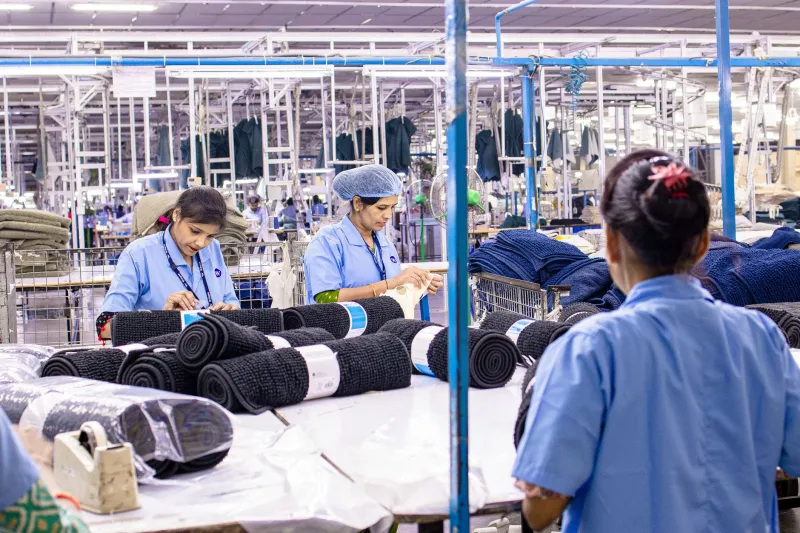
For the better part of two decades, the received wisdom in British manufacturing was clear: globalise your supply chain, drive down input costs, and compete on price. That orthodoxy is unravelling. Not dramatically, not overnight — but with the steady, purposeful momentum of companies that have done the maths and arrived at a different conclusion.
Post-Brexit trade friction, pandemic-era disruption, and rising geopolitical instability have all played their part in prompting a strategic rethink. But the most interesting development is this: a significant number of British manufacturers are not reshoring reluctantly. They are doing so enthusiastically, treating localisation as a source of competitive advantage rather than a concession to circumstance.
From Disruption to Deliberate Strategy
The immediate aftermath of Brexit produced predictable headlines — delays at Dover, paperwork burdens, customs complexity. For many businesses, those frictions prompted urgent tactical responses: stockpiling, supplier diversification, expedited freight. What is less well documented is the longer-term strategic reassessment that followed.
Many manufacturers found, when they were forced to audit their supply chains with fresh eyes, that the cost advantage of distant suppliers was smaller than assumed — and the hidden costs were larger. Extended lead times locked up working capital. Quality control across multiple time zones consumed management bandwidth. Currency volatility eroded margins in ways that procurement spreadsheets rarely captured fully. And the reputational cost of a single high-profile supply chain failure — a delayed product launch, a quality recall, a sustainability controversy traced to an overseas supplier — could dwarf years of accumulated cost savings.
Against that backdrop, the economics of domestic or near-shore supply began to look rather more attractive.
The 'Made in Britain' Premium: Real or Rhetorical?
Sceptics have long questioned whether British consumers and business buyers genuinely pay a premium for domestically produced goods, or whether 'Made in Britain' is merely a marketing flourish that dissolves the moment price sensitivity kicks in. The evidence increasingly favours the optimists.
The Made in Britain organisation — a not-for-profit certifying body — reported a 34 per cent increase in membership enquiries in 2023, with manufacturers citing commercial rather than patriotic motivations. Research by the British Standards Institution found that 67 per cent of UK procurement managers rated domestic supply as a meaningful factor in supplier selection, up from 48 per cent in 2019. The shift is particularly pronounced in sectors where quality assurance, traceability, and rapid iteration matter: food and drink, pharmaceuticals, precision engineering, and high-end consumer goods.
Consider Bute Island Foods, a Scottish plant-based food manufacturer that deliberately expanded domestic production capacity rather than outsourcing to lower-cost European facilities. The company has positioned its supply chain transparency as a central brand asset, attracting retail listings and foodservice contracts that competitors with opaque overseas supply chains have struggled to secure. Or take Ward Recycling, a Teesside-based metals business that has built a vertically integrated model drawing heavily on regional supply relationships — a structure that insulated it from the metal supply shocks of 2021 and 2022 while competitors scrambled.
These are not isolated cases. They represent a pattern of businesses discovering that localisation, done thoughtfully, can command a premium that more than compensates for higher input costs.
The Financial Trade-Offs: An Honest Assessment
It would be misleading to suggest that reshoring is financially straightforward. The honest picture is more nuanced.
Labour costs in the UK remain substantially higher than in many traditional offshore manufacturing locations. Capital investment requirements for domestic production capacity can be significant. And the transition period — during which a business is simultaneously managing legacy overseas relationships and building new domestic ones — carries its own cost and complexity.
The businesses that navigate this successfully tend to share certain characteristics. They have modelled the total cost of ownership rather than the unit cost in isolation. They have identified specific product lines or components where localisation delivers the greatest return, rather than applying a blanket reshoring policy. And they have been disciplined about accessing the financial support available to them — including the Levelling Up Fund, Made Smarter regional programmes, and UKEF (UK Export Finance) facilities for businesses whose reshored production feeds export activity.
For manufacturers in sectors with high customisation requirements, short product life cycles, or strong quality differentiation, the financial case for localisation is frequently compelling. For commodity producers competing primarily on price, the calculus is harder — though not impossible, particularly where automation investment can offset the labour cost differential.
A Framework for the Localisation Decision
For British manufacturers weighing whether localisation makes strategic sense, the following framework provides a starting structure:
Step 1: Map your true supply chain cost. Move beyond unit cost to capture working capital tied up in inventory, freight and customs costs, quality failure rates, and management time. Many businesses find this exercise alone changes their view of the economics.
Step 2: Identify your highest-risk dependencies. Which supply relationships, if disrupted, would cause the most damage? These are the candidates for localisation priority, regardless of cost.
Step 3: Assess your premium potential. Is your market one where origin, traceability, or speed-to-market commands a price premium? If so, quantify it. 'Made in Britain' is a commercial argument, not merely a values statement.
Step 4: Explore regional supply ecosystems. The UK's manufacturing regions — the West Midlands, South Yorkshire, the North East, and Scotland's central belt, among others — have been investing in supply chain capability. Engagement with local enterprise partnerships and sector bodies often reveals domestic supplier options that businesses did not know existed.
Step 5: Model the transition, not just the destination. Reshoring is a journey with costs along the way. Build a realistic transition plan that accounts for the overlap period and identifies the funding mechanisms available to support capital investment.
The Broader Opportunity
There is a dimension to this conversation that goes beyond individual business decisions. The cumulative effect of a meaningful reshoring trend among British manufacturers has implications for regional economies, employment, and the UK's industrial policy ambitions. The government's Advanced Manufacturing Plan, published in late 2023, explicitly identifies supply chain resilience and domestic capability as priorities — creating a policy environment that, for once, is broadly aligned with where commercial logic is already pointing.
British manufacturers who move early on localisation are not merely managing risk. They are positioning themselves to benefit from a structural shift in how supply chains are evaluated — by customers, by investors, and by regulators increasingly attentive to scope three emissions and supply chain ethics.
Brexit, for all its complexity, created a forcing function that prompted British businesses to look at their supply chains with a rigour they had previously avoided. The most forward-thinking among them are turning that scrutiny into strategy — and finding, to their considerable satisfaction, that home is closer to the competitive frontier than anyone expected.